Is it legal to use AI models in your webshop?
FashionPix · Published 8 augustus 2026 · Last updated 4 augustus 2026
The short answer: yes, AI models in your webshop are legal — big brands already use them. But since August 2026, rules do apply: a machine-readable label on the image, no mimicking of real people, and an image that shows the actual product. This article walks through the five rules in plain language — no legal jargon, no panic.
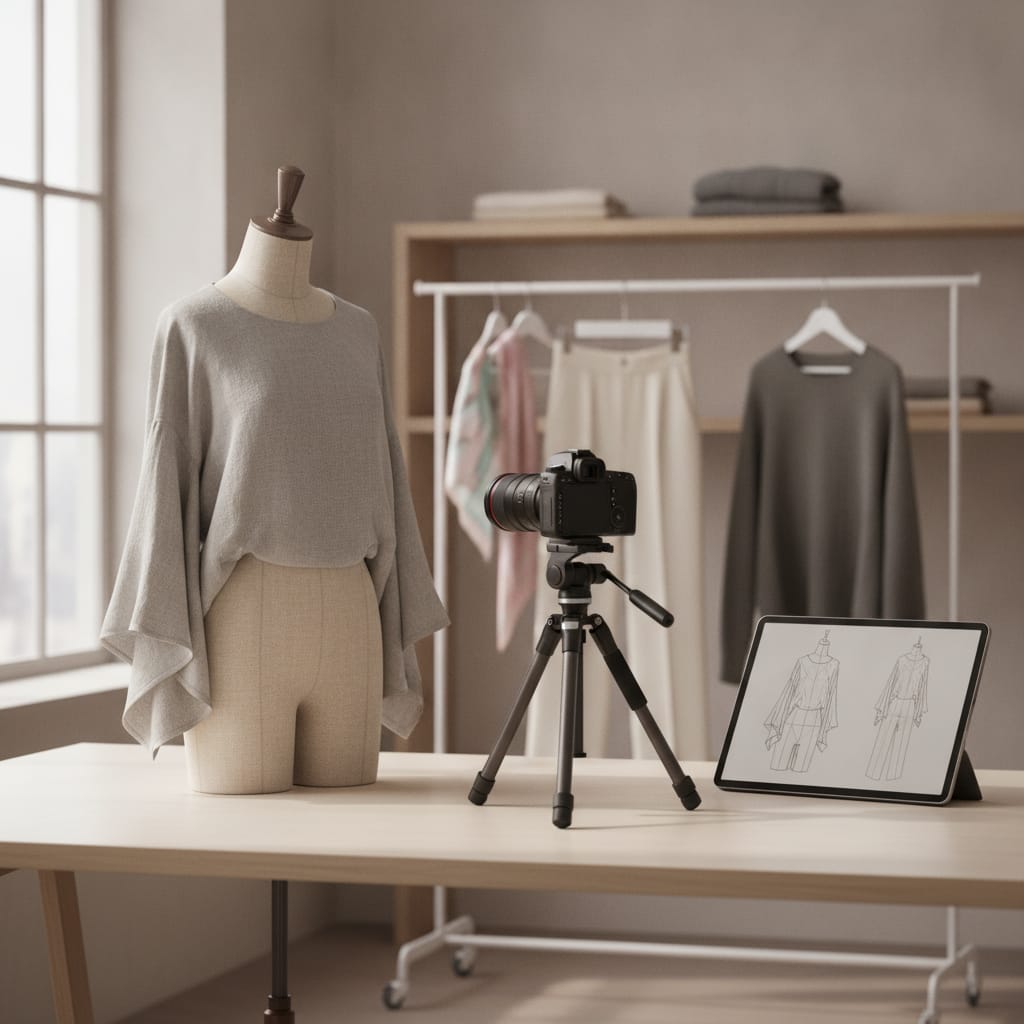
The rules for AI models in e-commerce, in plain English
- AI model images are legal in the EU; since 2 August 2026, the transparency obligation from the AI Act (Article 50) is enforceable.
- The core of that obligation: AI-generated images must carry a machine-readable label — a marker embedded in the file, not a sticker on the photo.
- A visible disclosure is only mandatory when a real person is being mimicked; a fictional model doesn't fall under that rule.
- Portrait rights still apply in full: an AI model that resembles a recognisable real person may only be used with that person's consent.
- And the oldest rule carries the most weight: the image must show the actual product — misleading customers was already banned long before AI existed.
Rules 1 and 2: labelling is mandatory, and there are two kinds
The EU AI Act sets out two obligations for images that often get mixed up. The first always applies: AI-generated or AI-edited images must carry a machine-readable label. That's a technical marker embedded in the file itself — software and platforms can detect that the image was machine-made. Your webshop visitor won't see anything.
The second obligation — a visible disclosure — only applies to deepfakes: images that mimic a real, existing person or appear to document something real. A fictional model that doesn't exist and isn't mimicking anyone isn't a deepfake; the machine-readable label is enough there.
There's also one image type that falls outside the labelling discussion entirely: the packshot without a model. A standalone garment on white doesn't show a person and doesn't document anything — there's nothing to label that could mislead a buyer.
The fines are serious (running into the millions or a percentage of turnover), but thankfully so is compliance: a good image provider automatically bakes the machine-readable label into every file. At FashionPix it's included by default — you don't have to do anything, and you can simply answer "yes" when a platform asks "is this an AI image?", with the proof sitting right in the file.
Rule 3: portrait rights — no real faces without consent
Independent of the AI Act, portrait rights still apply: a recognisable person controls the commercial use of their likeness. That doesn't change just because the image was machine-made — an AI model that's a dead ringer for a well-known public figure isn't a clever workaround, it's a straightforward portrait rights violation, on top of the visible-disclosure requirement under the AI Act.
So the safe route is a fictional model: a face that doesn't exist and isn't mimicking anyone. That's also the commercially easiest route — no model contract, no expiring usage rights, no extra payment for reuse.
If a client wants to use their own face (or an employee's) as a model, that's possible — with that person's consent. Serious providers ask for that consent explicitly and also check age: an uploaded face belonging to a minor should be rejected.
Watch for this when choosing a tool: a provider that puts any uploaded face on a model without any checks is dumping the entire legal risk on you.
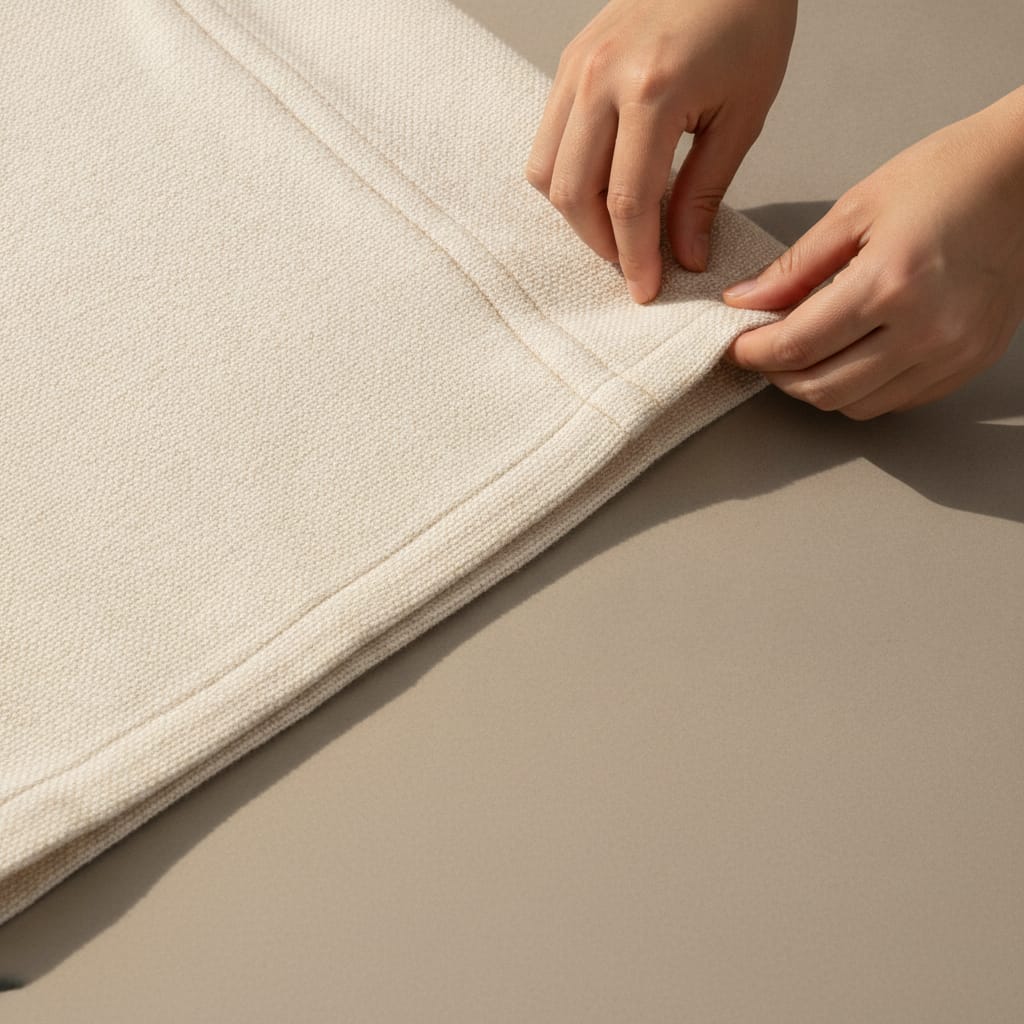
Rule 4: the image must show the actual product
The most important rule predates the AI Act: consumer law bans misleading claims. A product photo is a promise — the buyer is entitled to expect the delivered item matches what's shown in the image. That applied to flattering studio photography, and it applies in full to AI images too.
This is where the real quality gap between AI tools shows up. Generators that "redraw" a garment produce an approximation: the colour's slightly off, a button disappears, a print shifts. That's not just a return risk — it's a misleading-customers risk. Tools that transfer the actual garment from your own photo keep the promise intact — the item in the image is the item in the box.
In practice, this means checking every image for product accuracy before publishing. Does the colour match? The length, the fastening, the print? An image that makes the product look better than it is comes back as a return — and misleading customers structurally can land you in trouble with regulators and marketplaces alike.
Sizing info falls under the same rule: "model is 5'10" and wearing size M" is only honest if the model actually has those proportions. Made-up sizing info paired with an image that looks different is misleading dressed up as precision.
- The ban on misleading customers predates the AI Act and carries the most weight
- Transferring the actual garment beats a generator redrawing it
- Check colour, length, fastening and print before publishing
- Only show sizing info if it matches the body shown
Rule 5: just be upfront about it — it costs you nothing
On top of the legal obligations, there's the question of what your customer thinks. The practice among brands that use AI images responsibly: a short note on the FAQ page or in the terms ("our model images are partly AI-generated; the garment shown is always the real item") — and otherwise, just good imagery.
Customers turn out to care about two things mainly: does the product match, and does the sizing match. If you deliver on both, transparency about AI won't hurt you; if you don't, no disclaimer will save you.
Your return policy doesn't change — return rules are tied to the product, not to how the photo was made. What does change in practice: consistent imagery with honest sizing info lowers your return rate, and that's exactly where AI imagery pays for itself.
If you want to see the whole route — from upload to labelled, product-accurate image — check out the AI photoshoot for clothing. The full breakdown of the AI Act for webshops is on the AI Act page.
Frequently asked questions
Do I need to label every product photo as AI-generated?
No. What's required is the machine-readable label embedded in the file — invisible to the visitor. A visible disclosure is only required if the image mimics a real, existing person. A fictional model doesn't fall under that rule.
Can I create an AI model that looks like an influencer?
No. A recognisable resemblance to a real person falls under portrait rights and the visible-disclosure requirement for deepfakes. Use a fictional face, or ask the real person for consent.
Do these rules also apply to marketplaces like Amazon and Zalando?
The law applies everywhere; marketplaces add their own policies on top and are starting to ask, at the point of upload, whether an image was machine-made. With the machine-readable label embedded in the file, you can answer that truthfully.
Does a packshot without a model also need a label?
No — there's no person in it and it doesn't document anything that looks real. It's the only image type with no AI-labelling discussion at all, making it the simplest choice for some uses (catalogues, feeds).
Read more
- Reduce Returns
- Clothing Photos for Instagram
- AI Photography vs Photographer
- Realistic AI Model Photos
- Product fotografie kleding
- Your own model
- FashionPix — The signature of your webshop
Want AI imagery that meets the rules?
The machine-readable label is built in automatically, the models are fictional people, and the garment is transferred — not redrawn. Six images are free, no account needed.