AI photography vs the photographer: what do you use for what?
FashionPix · Published 8 augustus 2026 · Last updated 4 augustus 2026
The question isn't whether AI photography is "better" than a photographer — it's which job you use for which task. Compared across six points, AI wins the catalog by a mile, and the photographer wins the campaign shot that needs to tell a brand story. Most webshops land on a combination. Here's the honest comparison.
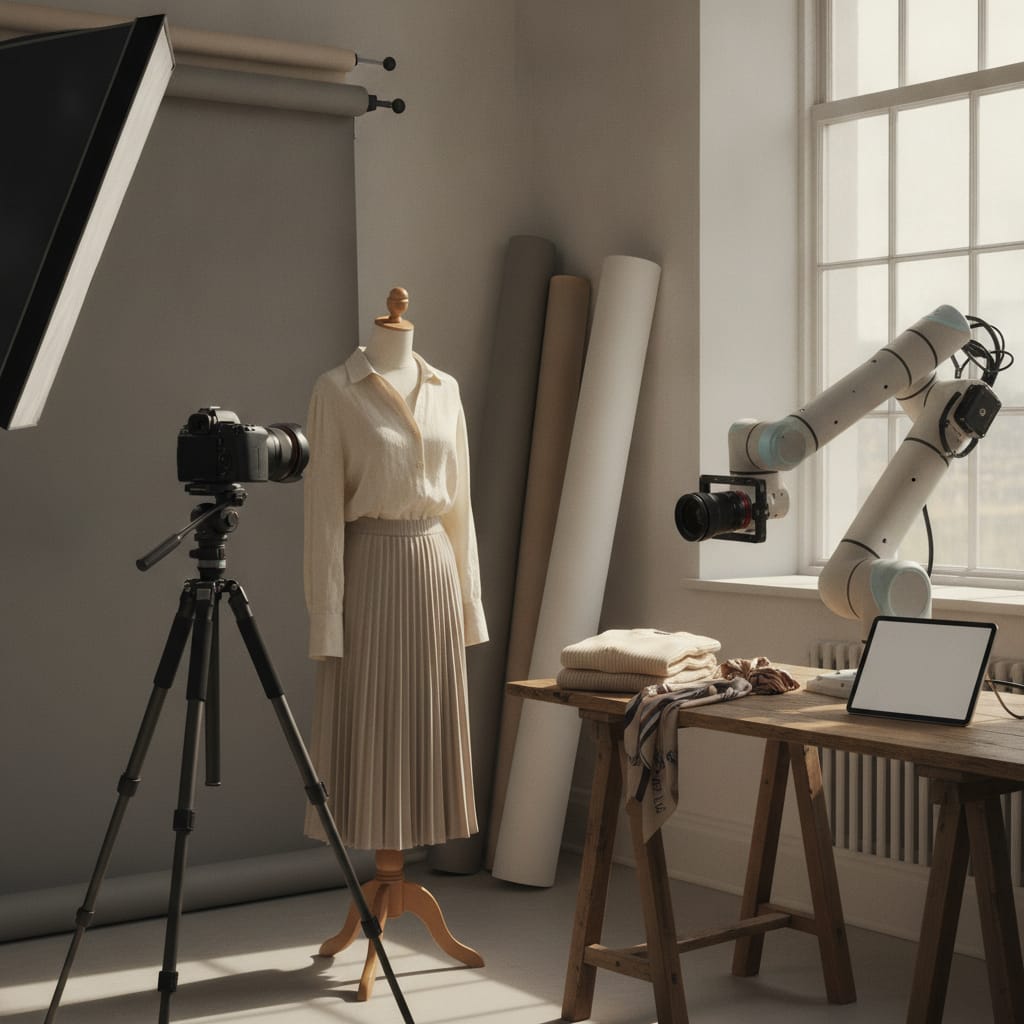
AI image or a real shoot: six points side by side
- Cost: a shoot day works out to € 60 to € 100 per item; AI images come in at roughly € 1.30 per item including copy.
- Turnaround: weeks of planning versus minutes per item — and a new colour or pose is a click instead of a new shoot.
- Consistency: across hundreds of items, a fixed AI model stays more consistent than any human production can keep up.
- The photographer wins on campaign imagery, complex materials at the sharpest level of detail, and brand storytelling.
- The hybrid approach — campaign by the photographer, catalog via AI — is the rational outcome for most webshops.
Cost and turnaround: this is where the gap is an order of magnitude
A professional product shoot easily costs € 1,500 to € 3,000 per day (photographer, model, styling, location or studio, retouching) and gets you through 20 to 40 items a day — that's € 60 to € 100 per item. AI images are priced per piece: at FashionPix, a complete item — four images plus all product copy — costs 4 credits, around € 1.30.
Turnaround differs even more sharply than price. You plan a shoot weeks ahead: photographer and model schedules, the location, then retouching. AI images are ready per item within minutes — a new collection can come in today and go live tomorrow.
The least visible difference is repeatability. A new colourway, a model who's no longer available, an extra pose you want — with a traditional production, each of those means a new (mini) shoot. With AI images, it's a click: a different colour is 2 credits, an extra pose is 1 credit, video is 1 credit.
To be fair: the photographer also delivers things that don't come with a credit price tag — direction, a styling eye, an outside perspective. That value is real; it just doesn't belong in catalog production but in campaign work, which we cover below.
- Shoot day: € 60 – € 100 per item · AI: ± € 1.30 including copy
- Weeks of turnaround versus minutes per item
- New colour / pose / video: new shoot versus a click
- Compare on /pricing with the calculator for your own numbers
Consistency: where AI structurally wins
The quiet strength of a webshop catalog is that everything looks the same: same model, same lighting, same background, across hundreds of items. For a human production, that's a constant battle — shoots are months apart, models aren't always available, October's light isn't March's light.
For AI images, consistency isn't effort but construction: the fixed model IS a fixed photo, the lighting IS a fixed setting. The hundredth item looks exactly like the first, even a year apart. Industry analyses aren't wrong to call inconsistent imagery "the silent killer" of webshop conversion.
That comes with a fair caveat: consistency is only an advantage if the quality per image holds up. A catalog that's consistently mediocre wins nothing. So judge an AI tool first on product fidelity — does the actual garment stay intact? — and only then on the consistency promise.
Second caveat: consistency applies within the tool. Mix images from three different AI tools and you build exactly the mess you were trying to avoid. Pick one visual language and stick with it — that was true for photographers, and it's just as true for AI.
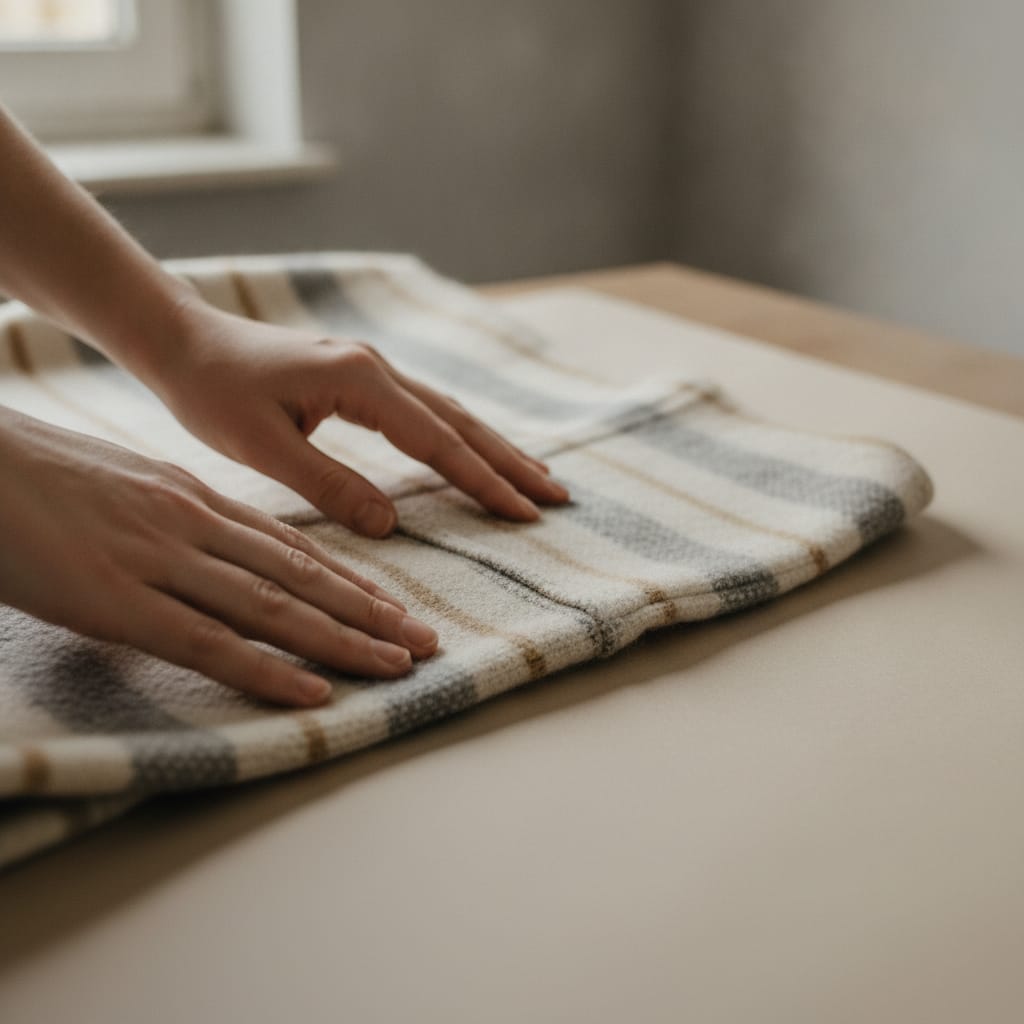
Where the photographer wins — and keeps winning
Campaign imagery. A brand campaign isn't a product record but a story: casting, styling, location, direction — decisions that together create a feeling. There, the photographer isn't an operator but an author, and that work doesn't reduce to "generate an image."
Complex materials at the highest level. AI images have gotten genuinely good at fabric texture — but for couture where the drape of that one specific cut is the product, or extremely technical materials under specific lighting, a controlled studio environment still sets the reference. If you're selling at that level, you also have the margin to pay for it.
Brand storytelling and the people behind it. A founder portrait, the workshop, the craft: imagery valued precisely for its authenticity needs to be real. Making that with AI would miss the point entirely.
And there's one category where the photographer wins for a practical reason: if you already have perfect, consistent studio photography. In that case, AI doesn't solve a problem — at most it helps with the next collection, or with copy and video alongside your existing imagery.
The hybrid approach: campaign by the photographer, catalog via AI
The rational outcome for most fashion webshops isn't picking a side but dividing the work. The catalog — every item, every colour, every size, with copy included — runs on AI: there, price per item, turnaround, and consistency all count, and on all three the gap is an order of magnitude.
The campaign — the two to four times a year you define your brand's imagery — goes to the photographer: there, the story counts, and the budget per image is justified because it's spread across dozens of channels and months.
The two reinforce each other: the campaign sets the style, and the fixed AI model carries that style into the catalog. Some brands go further and have their campaign model captured as an AI model — then literally the same face carries both campaign and catalog (with the model's permission, of course).
Want to see what the AI side delivers in practice: the AI photoshoot for clothing describes the complete set — and the first six images are free, so comparing against your current imagery costs fifteen minutes and no budget.
- Catalog → AI: price, speed, and consistency count
- Campaign → photographer: story, direction, and authenticity count
- The campaign sets the style, the fixed model carries it forward
- Comparing costs nothing: six free images alongside your current shoot
Frequently asked questions
Is AI imagery just as good as a photographer, quality-wise?
For catalog imagery: with a good tool, yes — provided the actual garment is transferred and not redrawn. For campaign imagery involving direction and story: no, that remains authorial work. Judge it per image type, not as one single question.
What's the concrete cost difference at 100 items?
A traditional production: € 6,000 to € 10,000 and weeks of turnaround. Via AI: 400 credits — one € 160 package — including product copy in four languages, within a few days. On /pricing the calculator works it out for your own numbers.
Do I lose quality with new colours and variants?
Quite the opposite: variants are exactly where AI wins. The same cut in a new colour is a click (2 credits) with guaranteed identical fabric and stitching — with a shoot, it's a new production with new variables.
Can I keep using my current photographer?
Yes, and that's often the best setup: the photographer for the campaign and brand story, AI for the catalog. The campaign sets the style; the fixed model carries that style into every item.
Read more
- Realistic AI Model Photos
- Plan a collection photoshoot
- Using Your Supplier's Photos
- Making Product Photos Consistent
- Every format
- FashionPix — The signature of your webshop
Want to compare for yourself?
Put six free images side by side with your current shoot and judge the difference on your own products — no account, no credit card.