Reducing returns: start with your product photos
Marcel Timmerman · Published 8 augustus 2026 · Last updated 25 September 2026
Returns are the biggest hidden cost of a fashion webshop: around a quarter of fashion orders come back, nearly 28 percent for women's wear and over 31 percent for shoes. And the main cause isn't a fickle customer but an information gap: up to 70 percent of fashion returns come down to size or fit (Thuiswinkel.org). You close that gap with imagery — and these are the six image choices that make the difference.
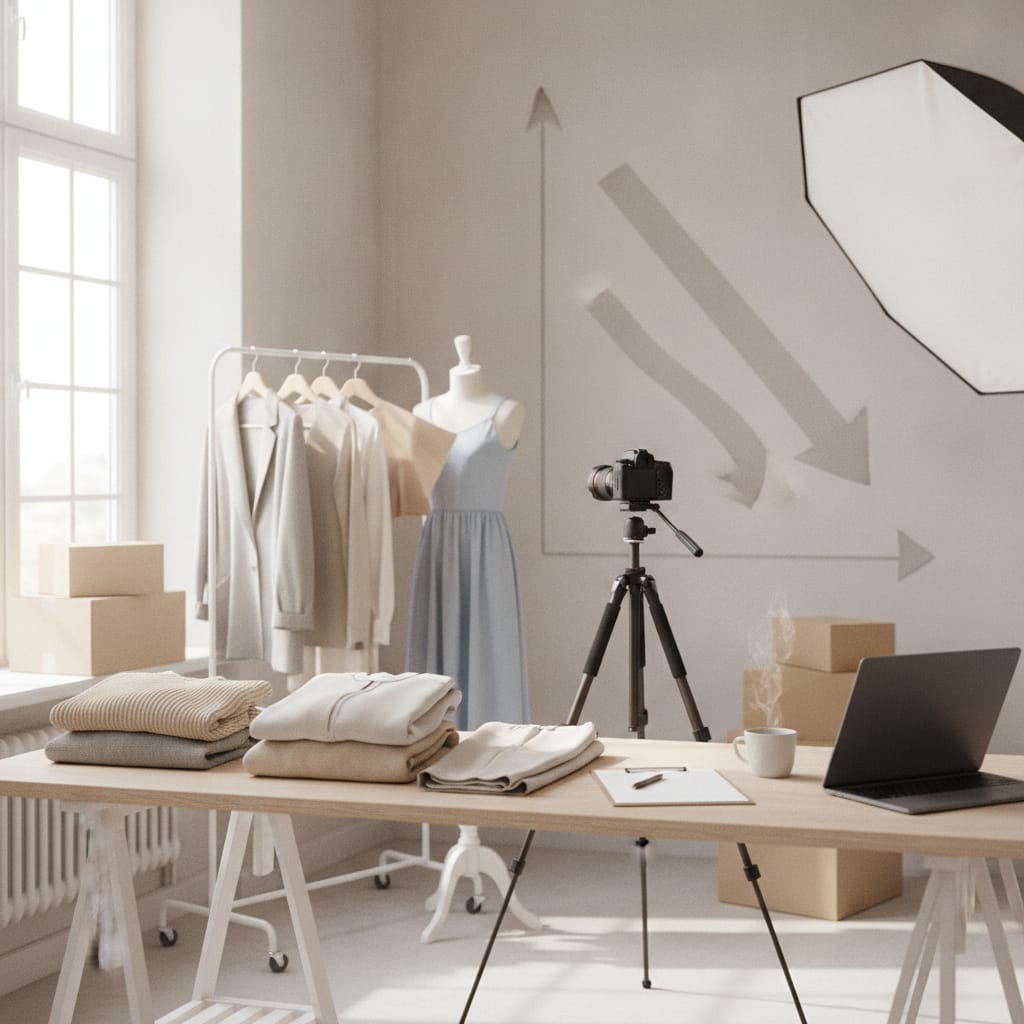
Six image choices that provably reduce returns
- People return clothing because the expectation didn't match reality: fit, color, material or length turned out different from what the image promised.
- Sizing info next to the model photo — "model is 5'10" and wears size M" — is the cheapest return-brake there is.
- Color accuracy is a system choice: warm mood lighting on a product photo sells a color that doesn't exist.
- Detail shots of fabric and finish replace the in-store touch and soften the surprise when unboxing.
- Video shows drape and movement — exactly the information a still image can't provide.
Why people return clothing — and what imagery can do about it
Return reasons in fashion are remarkably consistent: it didn't fit right (fit), it looked different (color and material), it draped differently (length and silhouette), or multiple sizes were ordered to try on. Except for the last one, these are all information problems — the buyer didn't know what they'd receive at the time of ordering.
That makes reducing returns largely an imagery challenge. Every question your photos answer before the order is placed is one less surprise at unboxing. And every surprise avoided is one less package coming back — along with the shipping costs, handling, and unsellable, wrinkled stock that come with it.
The math is unforgiving: with a 25 percent return rate and average return costs of ten to fifteen euros per package, every hundred orders costs you hundreds of euros in return handling. An image set that shaves a few points off that percentage pays for itself many times over.
The following five choices are ranked by impact per euro — starting with the cheapest.
Sizing info and fit: the two biggest levers
The cheapest return-brake is one sentence next to the model photo: "Model is 5'10" and wears size M." That sentence gives the buyer a reference point — they compare themselves to the model and choose their size based on knowledge instead of hope. Major platforms don't add that line to every image for nothing; it only requires a model whose height and size you actually know.
The second lever is body type itself. A buyer who's far removed from the model shown has to guess how the fabric will fall on them — and guessing means returning. Showing the same item on a model with your target audience's body type meaningfully shrinks that guesswork; for plus-size shops it's pretty much the whole game. How to approach that is covered in photographing plus-size clothing.
For pants and jeans, there's also the back view: fit around the hips and seat is THE fit question for denim, and only a back view answers it. A denim page without a back shot sends buyers straight into guesswork territory — see photographing jeans.
And show length honestly: a knee-length dress that looks midi in the photo will come back. The hem length in the image needs to match the actual product — with AI imagery, that's a matter of setting length as a fixed value instead of leaving it to chance.
- "Model is 5'10" and wears size M" on every model photo
- Model's body type ≈ target audience's body type
- For pants: the back view answers the fit question
- Hem length in the image = hem length of the actual product
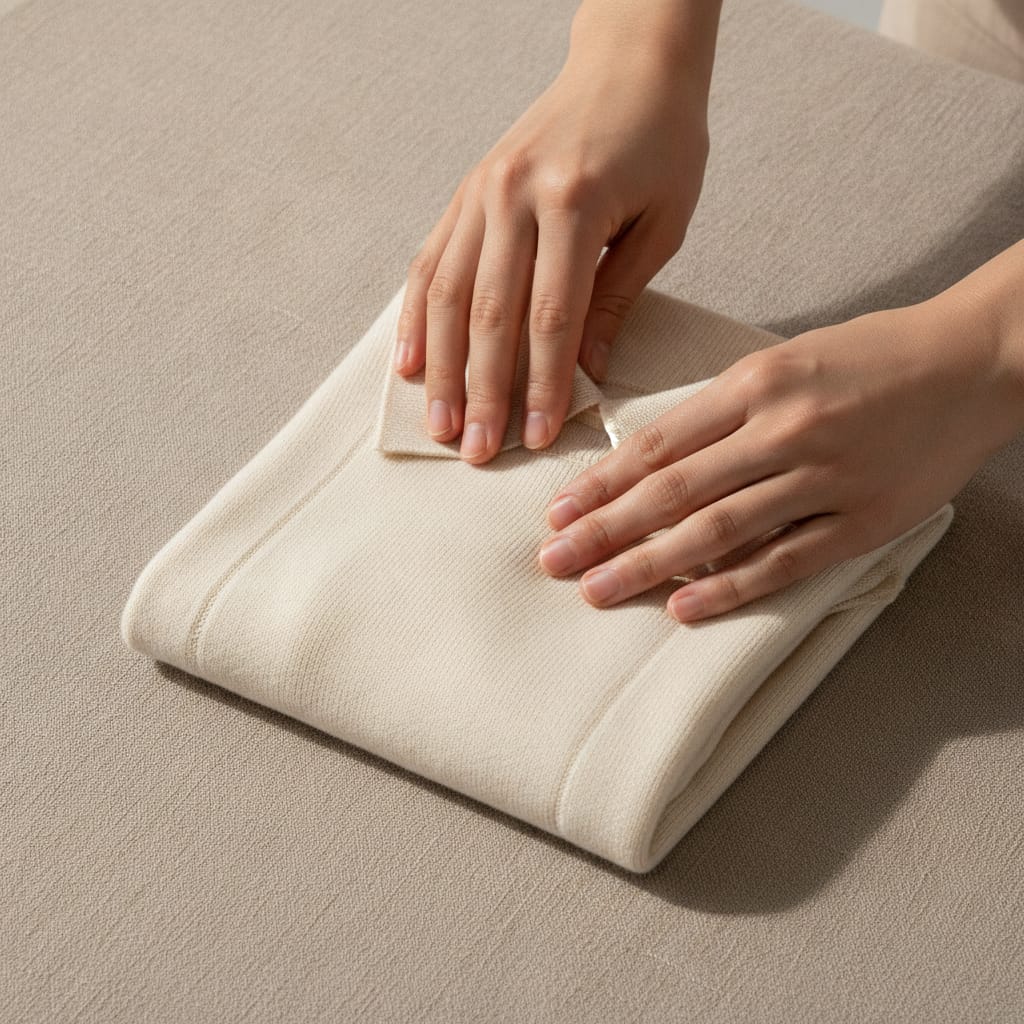
Color and material: what you show is what comes back
"The color was different from the photo" is, after fit, the biggest return reason — and it's almost always self-inflicted. Warm evening light, a colored background that reflects, a filter for mood: all of these turn a beige dress pink and mid-blue jeans greenish. The buyer orders the color in your photo, and receives the actual item.
The rule is simple and unglamorous: the product photo should be neutrally lit, with the item's color as the only color source. Mood and warmth belong in the lifestyle shot — that's the image that seduces, not the one that makes the color promise. Try to combine both in one photo, and you'll get returns with a lovely golden glow.
Material is the third expectation: does it shine, is it ribbed, does it drape heavy or light? Detail shots of the fabric — the waffle texture of a knit, the twill of denim, the sheen of satin — replace the in-store touch. With AI imagery, this is where the technology needs to deliver: an engine that transfers the actual garment keeps the fabric structure intact, while a generator that draws "something similar" doesn't.
Mention the material in text too, straight from the real care label: "100% cotton" next to the detail shot closes the expectation gap. Image and text confirming each other are stronger together than either alone.
Movement, consistency, and checking the results afterward
Something a photo can't show: how fabric moves. Does the skirt swing gracefully or sit stiff, does the denim stretch, does the jacket flow open? A five-second product video answers exactly those questions — and video on the product page provably lowers the chance of disappointment at unboxing. Now that a clip costs 7 credits, this is no longer a luxury but a standard part of the set.
Consistency across the catalog is the quiet sixth tip: when every item is shown on the same model with the same lighting, returning customers learn to read your visual language. After two orders, they know how your size M fits on that model — and order the third time with confidence. Switching models and lighting resets that learning process with every item.
Close the loop with your return data: the return reasons customers select are a free diagnosis of your image set. Lots of "too small" on one item? Then the image or sizing info isn't right there. Lots of "color different"? Look at the lighting on that product photo. Improving imagery without return data is guesswork; with it, it's targeted repair.
Returns will never hit zero, and they don't need to — some is just part of the service. The goal is to close the information gap, so the returns that remain are a choice, not a disappointment.
- The average return rate in fashion sits around 25%; women's wear is at 27.8% and shoes at 31.4%. — Fashion return statistics 2026
- Up to 70% of fashion returns are about size or fit. — Fashion return statistics 2026
- Consistent brand presentation across a catalog is associated with roughly 23% more revenue in industry analyses. — Consistency market research, 2026
Frequently asked questions
What reduces returns fastest?
Sizing info next to the model photo ("model is 5'10" and wears size M") plus an honest, neutrally lit main photo. These two cost almost nothing and address the two biggest return reasons: fit and color expectations.
Do AI model photos help or make things worse?
It entirely depends on the technology. Imagery that transfers the actual garment — color, print and length intact — closes the information gap just as well as a real shoot, with sizing info built right in. Imagery that redraws the item and shows "something like it" actually increases the chance of returns.
How much does one percentage point of returns actually matter?
Work it out for your own shop: number of orders × 1% × your cost per return (shipping, handling, value loss — easily €10 to €15). At a thousand orders a month, one percentage point is a hundred to a hundred fifty euros a month, every month.
Should I show multiple sizes on multiple models?
For most shops, one model with sizing info is enough. Plus-size shops and shops with a wide size range do provably benefit from a second body type — there, the gap between buyer and model is simply too large otherwise.
Written with the help of AI and reviewed by Marcel Timmerman, founder of FashionPix.
Read more
- Clothing Photos for Instagram
- Realistic AI Model Photos
- Plan a collection photoshoot
- Using Your Supplier's Photos
- Productfoto’s met model zonder fotoshoot
- Kleding fotograferen voor je webshop
- Modest fashion fotograferen
- Model photos
- FashionPix — Product photos, video and copy for your fashion webshop
Imagery that lives up to the expectation?
The actual garment transferred, sizing info built in automatically, and a video for the drape — that's the image set that curbs returns. Your first model photo is free, no account needed.