Using your supplier's photos: is that actually allowed?
Marcel Timmerman · Published 8 augustus 2026 · Last updated 25 September 2026
The question every dropshipper and plenty of resellers ask: I'm the one selling the product, so surely I can use the supplier's photos? The honest answer: only if you have permission — the photo is copyrighted by whoever created it, not by whoever sells the product. And even with permission, it's often a poor commercial choice. This article explains the rules, the risks, and the alternative.
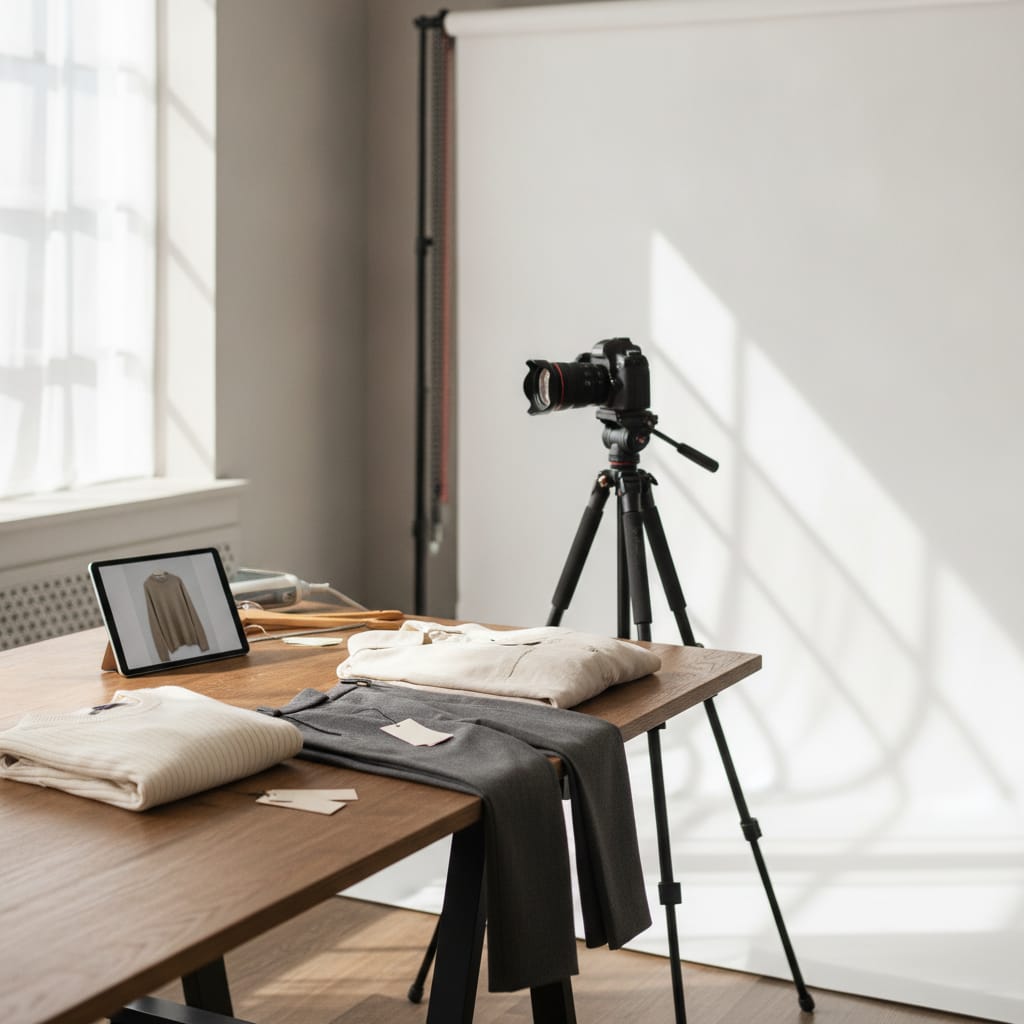
The rules around supplier photos, without the legal jargon
- Copyright belongs to whoever created the photo — buying the product doesn't give you rights to the image.
- Permission does exist: a brand portal, a media kit, or an explicit license in your supplier agreement.
- The risks without a license: damage claims, marketplace suspensions, and rejected ads.
- Even with permission, the problem remains: everyone uses the same image, and duplicate images get flagged by Google and Meta.
- The alternative has become cheaper than the risk: creating your own images from a single photo of your sample.
The main rule: the photo belongs to the creator, not the seller
Copyright automatically belongs to whoever created a photo — the photographer, or the company that commissioned the shoot. Buying a product means buying the product; the product photos don't automatically come with it legally. "It's on AliExpress so it's free to use" is a misunderstanding that trips up some webshop every week.
The fact that the entire market does it changes nothing. Widely copied supplier images remain protected work; the rights holder can decide to enforce at any moment — and specialized agencies these days do little else but send letters to webshops on behalf of photographers and brands.
The confusion is understandable: it feels logical that you'd be allowed to show a product you sell. And you are — with images you hold the rights to. The right to sell the product and the right to use someone else's photo of that product are simply two different things.
For branded products, trademark law adds another layer: official dealers get supplied with imagery directly, and anyone who isn't a dealer but advertises with brand imagery anyway has two problems instead of one.
When it is allowed: the three forms of permission
There are three legitimate routes. The first is the brand portal or media kit: many brands make product images explicitly available to resellers, often behind a dealer login. If the image is there, using it within that portal's terms is allowed — do read those terms though, as they often restrict use in ads or on marketplaces.
The second is the explicit license in your supplier agreement: a clause like "supplier grants buyer the right to use the supplied imagery for selling the products." If it's not there, ask for it — a serious supplier will happily arrange it, and a supplier who can't arrange it is telling you something important: they probably don't hold the rights themselves either.
The third is imagery the supplier demonstrably created themselves and gives you written permission (email is enough) to use. Keep that permission on file — in a dispute, "they said it was fine" without proof is worth nothing.
What does not count as permission: the image is on the supplier's website, the image appears on a hundred other shops, or the supplier "probably won't mind." Permission is something you have, not something you assume.
- Brand portal / media kit — within that portal's terms
- License clause in the supplier agreement
- Written permission from the creator — and keep it on file
- Not: "it's everywhere anyway" or "they probably won't mind"
The risks: claims, suspensions, and rejected ads
The legal risk is the damage claim: the rights holder can demand compensation for the use, plus costs. For a small shop, one such letter quickly adds up to hundreds or thousands of euros — for images that never delivered anything your own images couldn't have.
The operational risk is bigger: marketplaces enforce this themselves. Amazon, bol, and Etsy remove listings over rights complaints and suspend sellers who repeat the offense. A suspended account doesn't affect just one listing but your entire revenue — and marketplaces rarely give the benefit of the doubt in such cases.
The third risk sits with the ad platforms: Meta and TikTok recognize images already used by dozens of advertisers. Best case, your ad performs poorly (the algorithm has seen the image a thousand times already); worst case, it gets rejected over rights issues or "misleading origin."
And then there's the quietest risk: duplicate images in Google's eyes. An image that appears on a hundred sites gives Google no reason to show your page. Using supplier images means unwittingly doing SEO work for your entire competition.
The alternative: your own images from a single sample photo
The classic reason to use supplier images was that your own images were expensive: a photoshoot per product is absurd for a dropshipper or small reseller. That reason no longer exists. A single photo of your sample — flat lay, on your phone — now delivers your own model shot, product shot, and copy for about € 1.60 per item.
Your own images solve all four risks at once: the rights are yours (unlimited, ads included), there's no duplicate-content problem, and you build something supplier images never give you — a recognizable style across your entire shop.
You need the sample anyway: anyone selling a product they've never held has no idea what their customer actually receives. One order, one photo, and every image of that product is now yours.
For what this looks like in practice — including the ad formats and testing products without holding stock — see product photos for dropshipping.
- Own images: ± € 1.60 per item, rights fully yours
- No duplicate-content issues with Google, Meta, or TikTok
- Your own style = brand building that supplier images never give you
- You wanted the sample anyway — for quality control
Frequently asked questions
Can I use AliExpress photos for my dropshipping shop?
Not without a license. The image being on AliExpress doesn't mean it's free of rights — those belong to the creator. In practice, not every rights holder enforces, but marketplaces and ad platforms do, and a suspension affects your entire account.
My supplier says I can use the photos — is that enough?
If the supplier holds the rights themselves (they commissioned the shoot) and gives it to you in writing: yes. Ask for a clause in the agreement or an email, and keep it on file. If the supplier can't provide that, they probably don't hold the rights either.
What does it cost if I get caught?
A damage claim for image use quickly runs into the hundreds of euros per photo, plus possible legal costs. The operational risk is often bigger: removed listings and account suspension on the marketplace your revenue depends on.
Isn't creating your own images way too expensive for small margins?
Not anymore. One sample photo produces a complete listing — four images plus copy — for about € 1.60. That's less than the shipping cost of a single return, and the images are permanently yours.
Written with the help of AI and reviewed by Marcel Timmerman, founder of FashionPix.
Read more
- Flat lay photography for clothing
- Virtual Fitting Room Ecommerce
- Tools die kleding op een model zetten
- Clothing Product Photography Cost
- Product fotografie kleding
- The assembly line
- FashionPix — Product photos, video and copy for your fashion webshop
Ready to swap borrowed images for your own?
One photo of your sample and every image of that product is yours — rights, style, and all. Your first model photo is free, no account needed.