Packshot or lifestyle photo: which image belongs where?
Marcel Timmerman · Published 8 augustus 2026
The question "packshot or lifestyle?" has the wrong word in the middle: it's not an or. A packshot and a lifestyle photo answer different questions at different points in the customer journey — and a good product page has both, in the right order. This article explains which image belongs where and why.
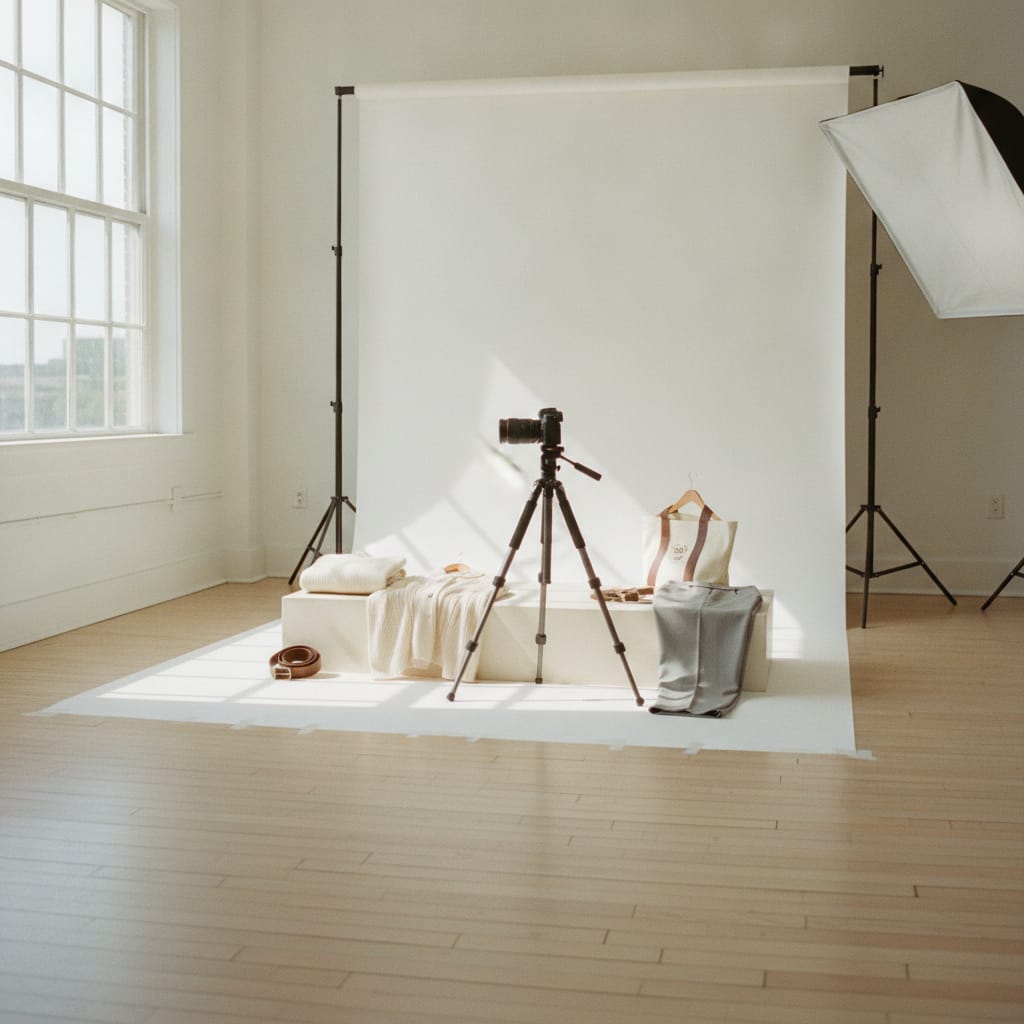
Packshot vs. lifestyle: the difference and the right use
- A packshot shows the product neutrally and without distraction; a lifestyle photo shows the product in use, with context and mood.
- The packshot wins wherever comparison happens: search results, marketplaces and the collection overview.
- Lifestyle wins wherever seduction happens: ads, social media and the homepage.
- On the product page, the order is: first the neutral image that informs, then the mood that convinces.
- Traditionally these are two separate shoots; nowadays both image types can come from a single upload.
The definitions — and the question each image type answers
A packshot is the product itself, isolated on a neutral (usually white) background: no model, no props, no setting. The image answers the question "what exactly am I buying?" — shape, colour, details, nothing added and nothing left out.
A lifestyle photo (or mood shot) shows the product in its world: worn by a model, on a terrace, in an interior. The image answers a different question: "what will my life look like with this?" That sounds a bit abstract, but it's exactly how fashion gets bought — nobody buys a dress, everybody buys an occasion.
In between sits the model shot on a neutral background: the product worn, but without a scene. For clothing, that's often the most important of the three — it shows fit (the information question) with a human scale (the seduction question).
Anyone who treats the two image types as competitors always chooses wrong. They're stages: the same product, two moments in the buyer's decision.
Where the packshot wins: everywhere comparison happens
In search results and on marketplaces, your product sits in a row next to dozens of alternatives. There, clarity wins: a clean isolated image reads at a glance, while an atmospheric scene turns into a blurry smudge at thumbnail size. Marketplaces like Amazon and bol even require the neutral main image.
Your own collection overview is a comparison environment too. Twenty items on the same neutral background look like a collection; twenty different scenes look like a flea market. Consistency matters more here than beauty per image.
The packshot has another quiet advantage: it doesn't age. A mood shot carries a season and a style with it; the isolated photo of a white shirt is just as usable in three years.
And there's a legal quirk few sellers know: a packshot without a model is the only image type with zero AI-labelling requirement — after all, there's no human in it. For anyone using AI imagery, that's a detail that saves paperwork.
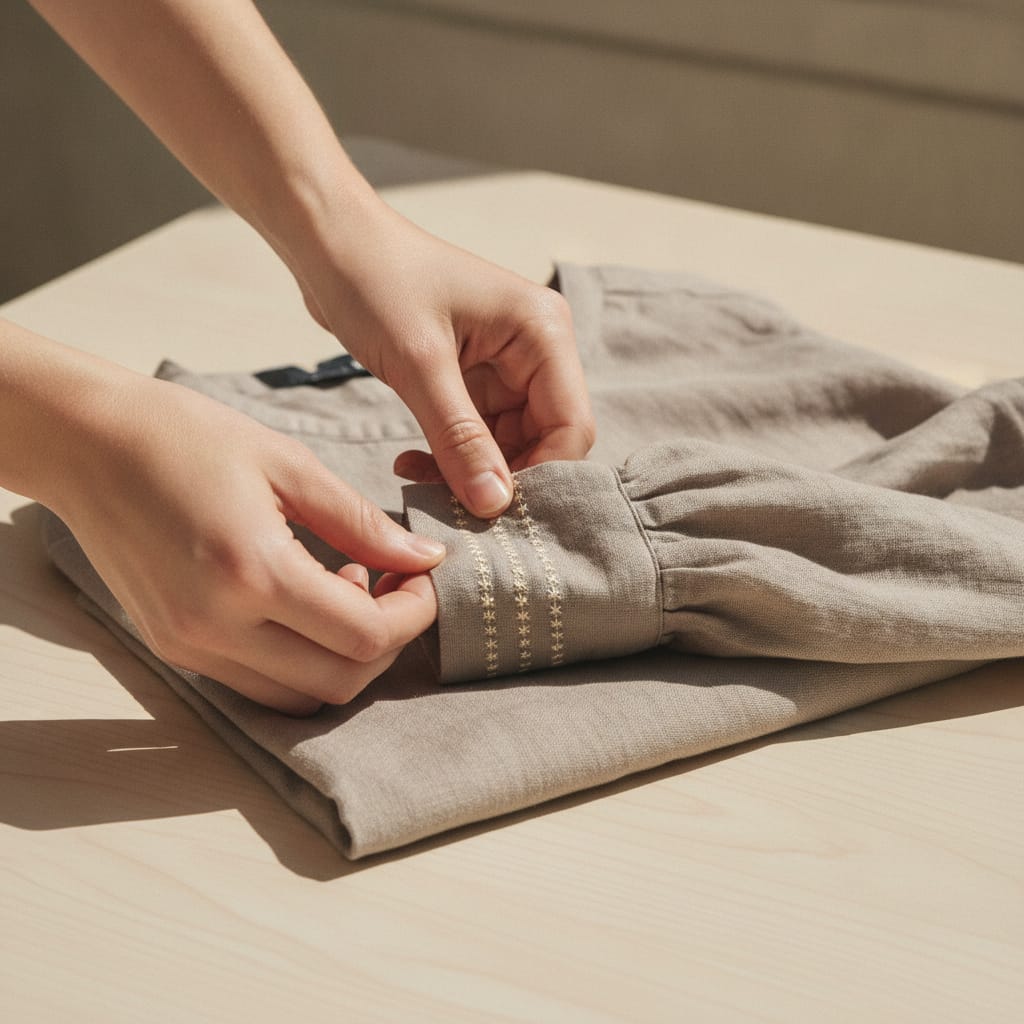
Where lifestyle wins: everywhere seduction happens
An ad doesn't compete with other products but with everything else in the feed: holiday photos, videos, news. A white packshot loses that fight by definition — it reads as an advert and gets scrolled past. A good mood shot reads as content, and that's what earns the second of attention where a click happens.
The same applies on social media, amplified by the platform itself: Instagram and TikTok are mood-driven environments. A feed full of isolated products on white feels like a catalogue; brands that work there use scenes, people and movement.
On the homepage and in newsletters, lifestyle is the right register too: that's where you build a brand, not a comparison chart. The visitor landing there doesn't yet know what they want — the mood shot gives them a reason to keep looking.
The pitfall is lifestyle in the wrong spot: an atmospheric image as the main photo on a marketplace gets rejected, and as the first image on a product page it delays the information question that takes priority there. Mood seduces best once the neutral image has already done its job.
- Packshot: search results, marketplace, collection overview, comparison
- Lifestyle: ads, social media, homepage, newsletter
- Model shot on neutral background: the bridge — fit with human scale
- Mood shot as main image on a marketplace = rejection
The ideal order on the product page — and what it costs
The product page is where both types come together, and the order follows the buyer's decision: inform first, then convince. In practice: the model shot or packshot as the main image, then back and detail shots, and the mood shot as the closer for anyone who still needs a final nudge.
Traditionally, two image types mean two productions: a studio shoot for the packshots and a location shoot for the lifestyle images — planning twice, paying twice. That's the practical reason many webshops only have one of the two.
With AI image generation, that split disappears: the same upload produces the neutral model shot and the packshot (bundled in the 7-credit article set) and optionally the on-location mood shot (5 credits). See how that full route works at the AI photoshoot for clothing.
What still matters is separating them by use: the neutral image on the product page and marketplace, the mood shot on the homepage and social. Producing both has become easy; placing both in the right spot is still the craft.
Frequently asked questions
What's the difference between a packshot and a product photo?
"Product photo" is the umbrella term for any image of your product; the packshot is the specific variant where the product stands isolated on a neutral background, without a model or context.
Can a lifestyle photo be the main image on my product page?
It can, but it's rarely wise — and on marketplaces it's off-limits. A product page visitor is first looking for information: what is it, how does it work, how does it fit. Put the mood shot second or last; that's where it does its job.
Which of the two reduces returns?
The neutral image — especially the model shot with sizing information. Returns come from wrong expectations about fit and colour, and it's exactly those expectations the informative image gets right. Mood sells; the neutral image prevents the return.
Do I need separate shoots for both types?
Classically, yes: studio for the packshots, location for the mood shots. Not anymore with AI generation — a single photo of the garment produces both image types, each for its own spot.
Written with the help of AI and reviewed by Marcel Timmerman, founder of FashionPix.
Read more
- Reduce Returns
- Clothing Photos for Instagram
- Realistic AI Model Photos
- Plan a collection photoshoot
- Product fotografie kleding
- Lifestyle & campaign
- FashionPix — Product photos, video and copy for your fashion webshop
Both image types from one upload?
Packshot, model shot and lifestyle photo from the same photo — each for its own spot in your shop. Your first model photo is free, no account needed.