Where it goes wrong in practice
Everyone's using the same mockups
Free mockup libraries are exactly that: libraries everyone draws from. A shopper comparing three stores sees the same model in the same pose three times over — only the print differs. That's not how you build a brand.
The sticker effect gives away the fake
A flat design pasted over a photo template ignores the folds of the fabric. The eye catches it instantly, even if it can't name what's wrong — and "fake" is the last thing your ad should signal.
Ten variants needed per design
Feed, story, ad, marketplace: every design needs multiple images for different audiences. A photoshoot per design makes print-on-demand unworkable; templates make everything look the same.
From printed shirt to your own mockup line
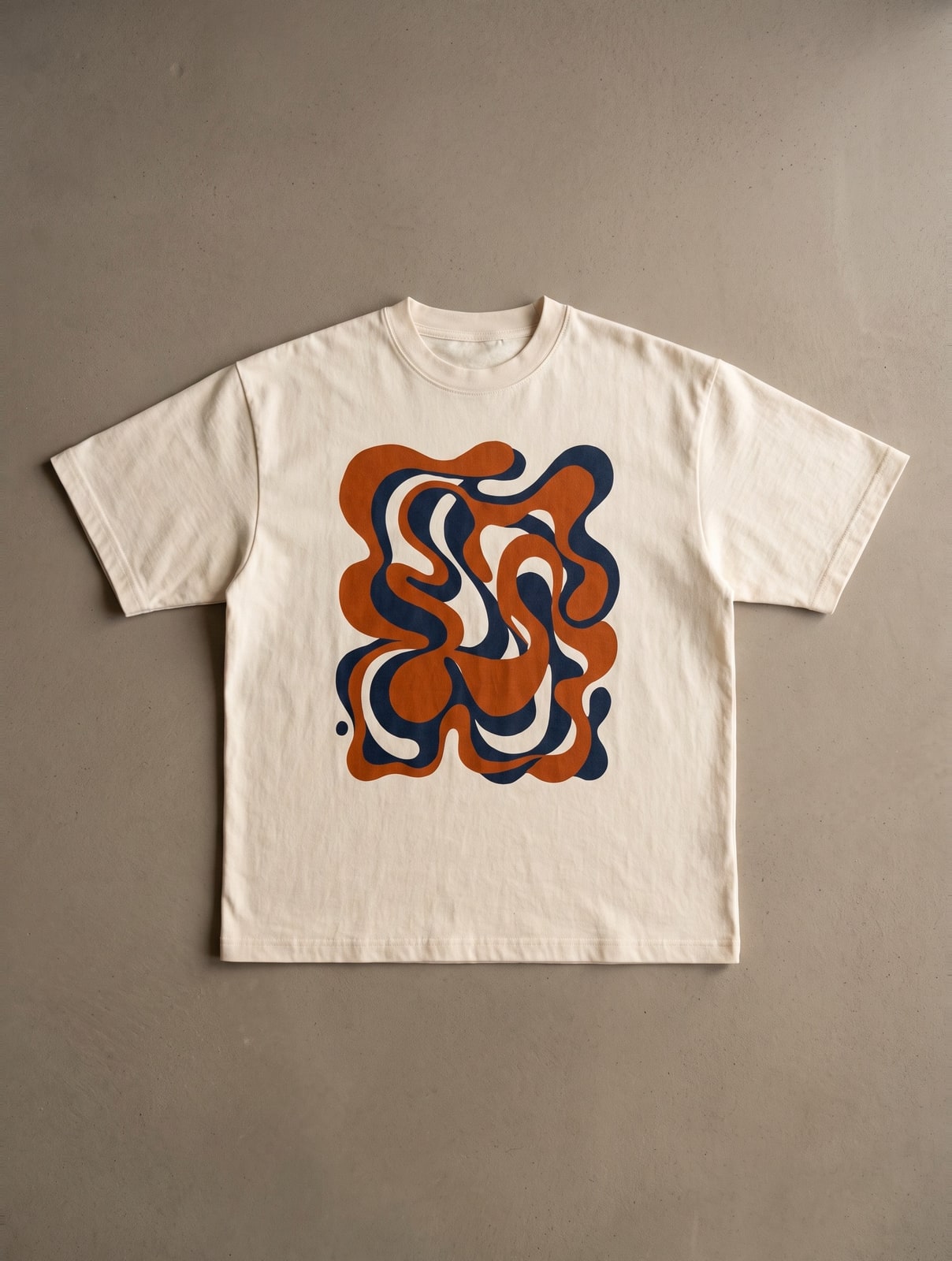
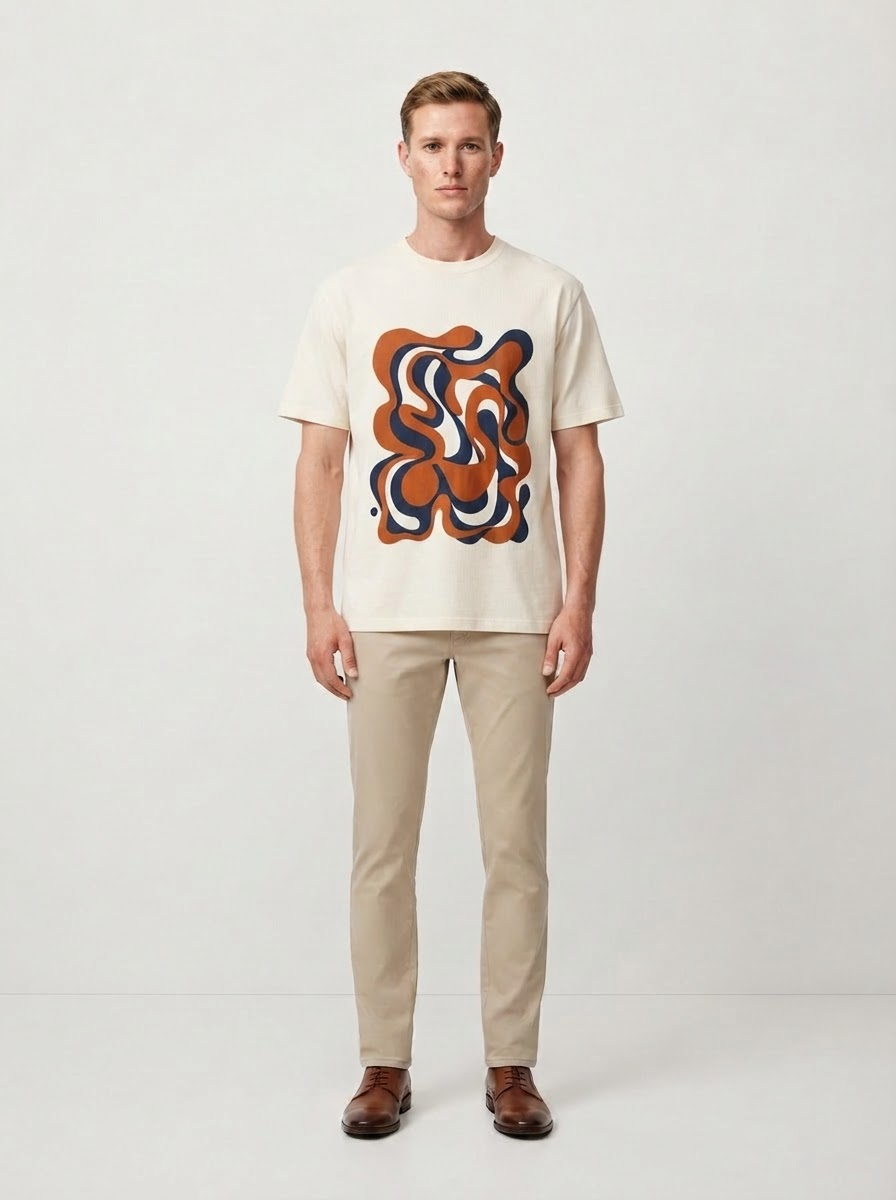
Photograph your sample — or your proof print — flat and in full. From that, you get your print on a real-looking model, in your own consistent style.
- The print follows the fabric: transferred from your photo, not layered flat on top
- Pick your models once — young and street, sporty, or broad for the gifting niche — and every mockup after that is recognisably yours
- Multiple poses per design (1 credit per extra pose), plus every format for feed, story and ads free from the same image
- Twenty designs at once: the batch queue works through them, five at a time, while you do something else
- The packshot on white (1 credit) for your marketplace listing — no AI label needed, since there's no person in it
Why your own mockup style beats a subscription
Mockup subscriptions charge monthly for access to images everyone else has. Here you pay per image (1 credit, ± € 0.32) for something no one else has: your print on your own models. Twenty designs with three mockups each runs about € 19 — a one-off cost, no subscription ticking on through a month where you release nothing. And the image is ad-ready right away: unique visuals perform better in ad auctions than a template the algorithm has already seen a thousand times.
In three steps
- Photograph your printed shirt. Your sample or proof print, flat in daylight. The print needs to be fully visible.
- Pick your models once. Who your audience is decides who wears your shirt. After that, every mockup stays consistent.
- Generate per design. One image costs 1 credit; extra poses and all social formats cost little to nothing.
Mockup generator or FashionPix
| The model | same templates as everyone else | your own models, no one else's |
| The print | flat layer over a photo | transferred — moves with the fabric |
| Cost | monthly subscription | 1 credit (± € 0.32) per image |
| Formats for social and ads | redo per format | free from the same image |
| Failed image | — | automatically refunded |
Frequently asked questions
I only have a digital design, no sample — does that work?
The engine transfers a real garment, so you'll need a photo of the printed shirt — your sample or a proof print. Print-on-demand suppliers usually send a sample; one photo of it is enough for all your mockups of that design.
Does the print really move with the fabric?
Yes — that's what sets it apart from a template. The print sits on the fabric from your photo and follows how that fabric falls on the body. No flat rectangle floating over a chest.
Can I use different models per niche?
Yes. You choose your models yourself from the house cast — forty models aged 4 to 64 — and you can keep a different selection per line or niche.
What does a collection of twenty designs cost?
With three mockups per design: 60 images = 60 credits, roughly € 19. Want a packshot and copy per design too? Budget 5 credits per design.
Can I use the images for ads?
Yes, unlimited — the images are yours. The machine-readable AI marker is included automatically, so you can simply answer yes when ad platforms ask about AI imagery.
Read more
- Product photos for Etsy
- Product photos for Amazon
- Product Photos for Dropshipping
- AI Product Description Generator
- Moet je AI-foto’s melden? De AI Act uitgelegd
- Recolor
- FashionPix — Product photos, video and copy for your fashion webshop
Try it with your own item
Your first model photo is free, no account and no credit card. You keep it, even if you take nothing else.