Where it goes wrong in practice
Same photo, same shop, same auction
The buyer who sees your ad saw the exact same image yesterday, on someone else's page. Meta and TikTok saw it too — a thousand times over. Duplicate images drag down your ad score and your cost per click, before anyone even lands on your site.
No visuals = no brand = price competition
If you look like everyone else, price is the only thing you can compete on — and in dropshipping, someone else always wins on price. A distinct visual style is pretty much the only defensible asset a dropshipper has.
Testing costs stock you don't have
The name of the game is fast validation: try ten products, keep two. But a photoshoot for every test product is absurd, so you end up testing with the supplier photo — and then you can't tell whether the product failed or the image did.
One sample photo, one brand of your own
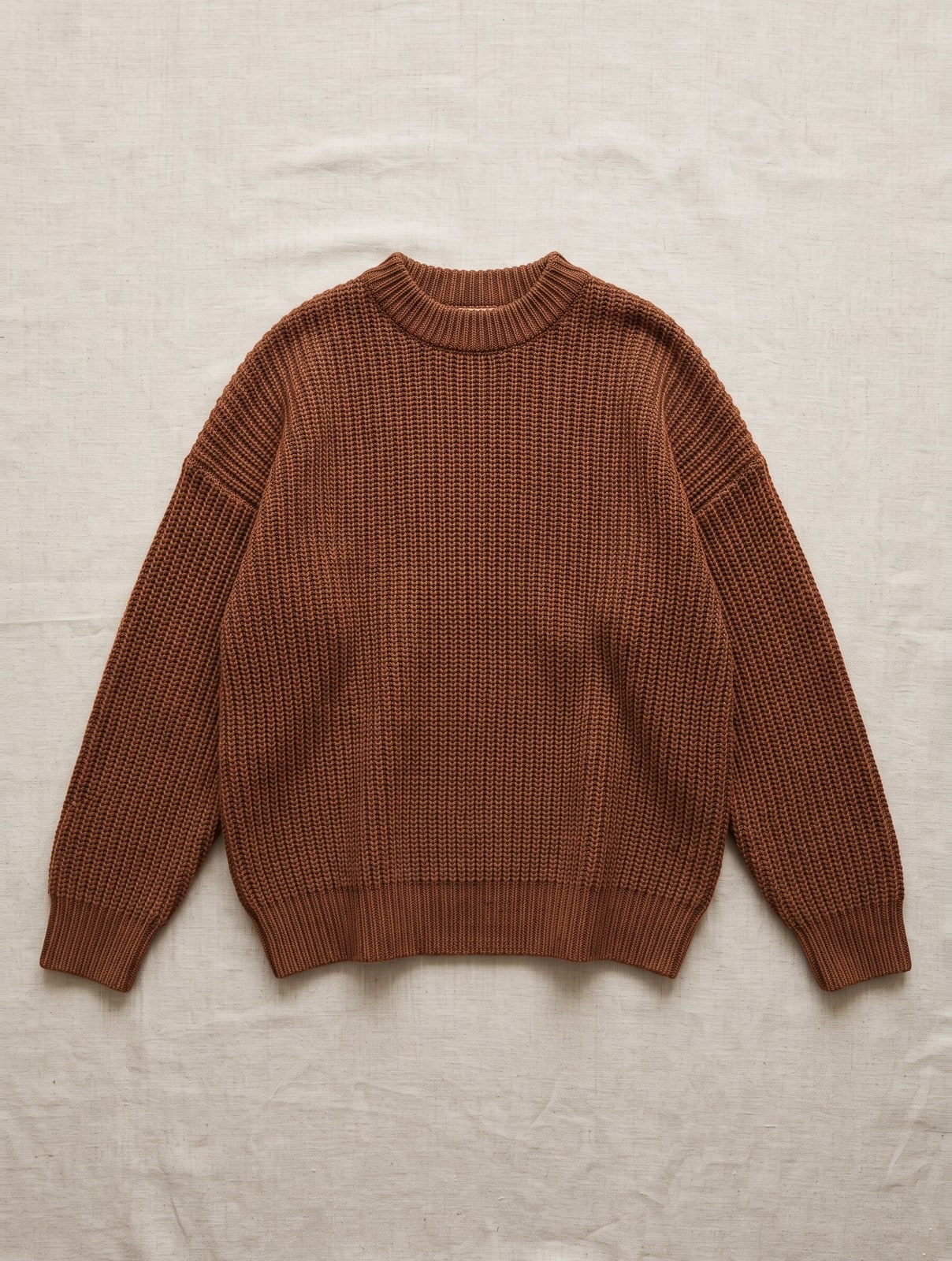
Order a single sample (you'd want one anyway, to check the quality), photograph it flat with your phone, and upload it. Everything else happens automatically.
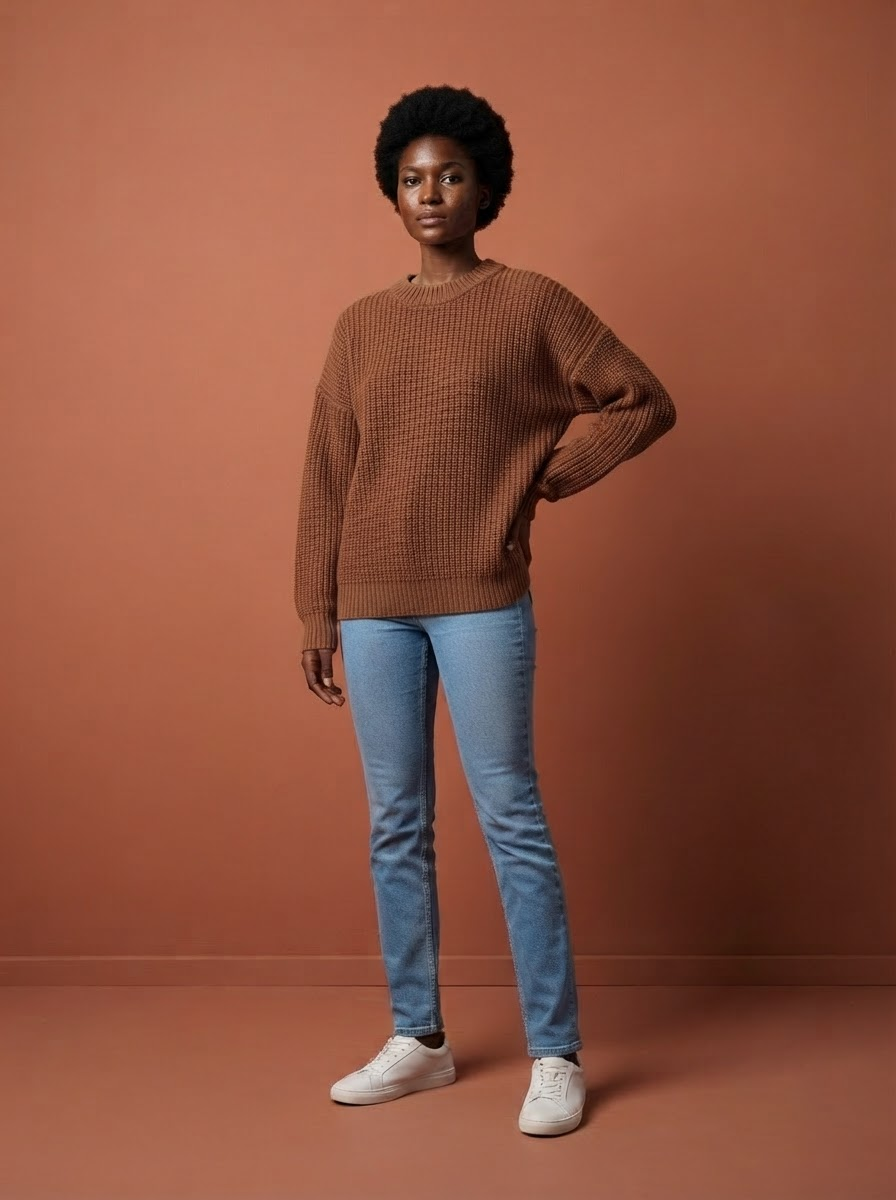
- Your own model shots in a consistent style — every product in your shop shares the same face and the same light
- Ad-ready: all formats (4:5 feed, 9:16 story, 1:1) free from the same image, plus a 5-second video for 7 credits as a hook
- Your own product copy in four languages — no translated supplier text that Google flags as duplicate content
- Validating ten products = 50 credits (around € 16), no shoot and no stock needed
- The pack shot on pure white for marketplace listings — 1 credit
Why unique visuals make your ads cheaper
Ad platforms reward images they haven't seen before that also drive engagement; they penalise creatives that are already running everywhere. So a model shot with your own style performs twice over: it sets you apart with buyers and it scores better in the auction. And once a product takes off, you scale without a new shoot: extra poses (1 credit), a different colour (2 credits), video (7 credits) — all just extra options on the image you already have.
In three steps
- Order and photograph your sample. One photo, flat, in daylight. You wanted to check the quality before selling it anyway.
- Choose your style once. Your models and your lighting — this becomes your shop's recognisable look.
- Test, measure and scale. Ten products for around € 16. What works gets variants and video; what doesn't cost you next to nothing.
Supplier photos vs. your own visuals
| Recognisability | same image as a hundred shops | your models, your style |
| Ad score | duplicate, seen a thousand times already | unique image per shop |
| Legal | photo belongs to the creator — claim risk | image is yours, use it freely |
| Testing ten products | only possible with someone else's images | 50 credits (around € 16) |
| Copy | translated supplier text | your own copy, four languages |
Frequently asked questions
Am I even allowed to use supplier photos?
Only with a licence — the photo legally belongs to whoever created it, not to whoever sells the product. Many dropshippers use them without one, which is a claim and suspension risk. Full explanation in using your supplier's photos.
Do I really need a sample?
Yes — and that's not a downside. The actual garment gets transferred from your photo; without a sample you also wouldn't know what your customer is actually going to receive. One sample photo is enough for all the images of that product.
Does this work for typical dropshipping categories?
Clothing, shoes, bags, jewellery and accessories — yes. For small products like jewellery, we automatically create a close-up crop, since a necklace doesn't sell well on a full-body shot.
What does testing and then scaling cost?
Validating ten products is 50 credits. If a product takes off, each extra image costs 1 credit, a different colour costs 2, a video costs 7. A full store of 50 products: 250 credits.
Does this imagery really perform better in ads?
Unique images the algorithm hasn't seen yet structurally outperform a creative that's already running everywhere — and a model that consistently represents your brand builds recognition a random supplier photo never will. You can test this right away: your first model photo is free.
Read more
- AI Product Description Generator
- Modelfoto’s én productteksten
- Productfotografie voor Shopify
- Product photography for Lightspeed
- Moet je AI-foto’s melden? De AI Act uitgelegd
- The assembly line
- FashionPix — Product photos, video and copy for your fashion webshop
Try it with your own item
Your first model photo is free, no account and no credit card. You keep it, even if you take nothing else.