Product video: why every webshop needs it
FashionPix · Published 1 juni 2026 · Last updated 4 augustus 2026
A product video shows clothing in a way a photo never can: in motion, with fit and texture on full display. For webshop owners and fashion brands, video is no longer a nice-to-have — it's a practical tool for convincing hesitant buyers and cutting down on unnecessary returns.
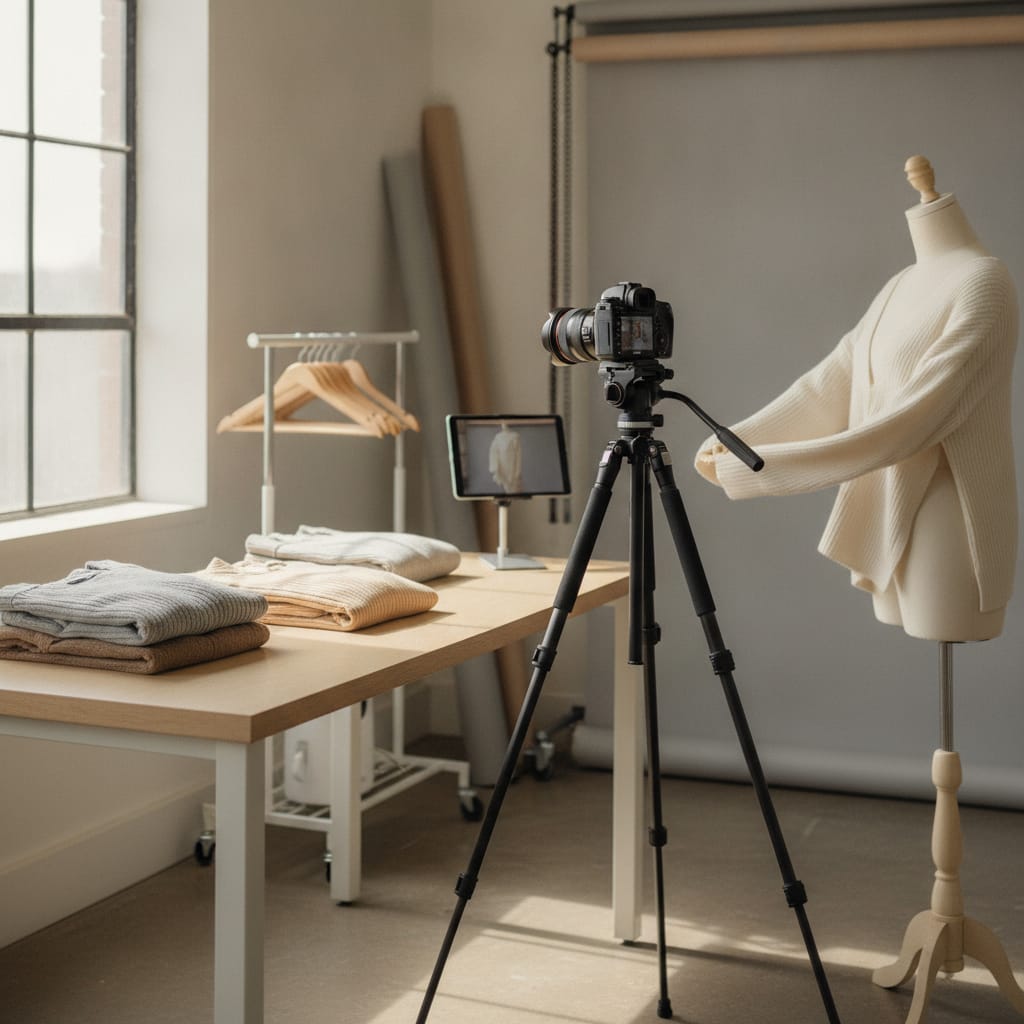
Everything you need to know about product video for your webshop
- A product video shows movement, fit and texture — information a still photo simply can't capture.
- Video lowers your return rate because customers know better what they're buying.
- You don't need a big budget or a professional film crew to get started.
- Short, consistent videos perform better than long, expensive productions.
- Platforms like Instagram, TikTok and Google Shopping are giving video more and more visibility.
What exactly is a product video, and why does it work?
A product video is a short clip that shows a product in motion. For clothing, that means: how a fabric falls, how a jacket moves while walking, or how a colour looks in real light. That information helps a customer make a well-informed purchase decision.
The fundamental problem with buying clothes online is the lack of tactile experience. You can't feel a sweater, try on a pair of trousers, or see a dress move. A photo solves part of that problem, but a video does it far better.
When a customer sees a garment in motion — worn by a model or displayed on a mannequin — they get a much more realistic picture of the product. That reduces the chance of disappointment after delivery, and with it, the chance of a return.
On top of that, video keeps visitors on your product page longer. That's good for your conversion rate and for how search engines rank your page. A page where people spend more time is seen as more relevant.
What types of product videos work for fashion stores?
For a fashion business, there are roughly four types of product videos: the 360° spin video, the model video, the detail video and the styling video. Each type serves a different purpose and fits a different stage of the buying journey.
The 360° spin video shows a garment from every angle, often on a mannequin or hanger. This is the most neutral and scalable option: you can produce it quickly and consistently for a large assortment.
The model video takes things a step further: a real person wears the garment and walks, turns or poses. This gives the most realistic impression of fit and movement, but takes more time and budget. Curious how to achieve that same effect without a shoot? Check out creating a product video.
The detail video zooms in on specific features: a zipper, embroidery, the texture of the fabric. This type works well alongside a product photo and is quick to produce.
The styling video combines multiple products into one outfit and offers inspiration. This type focuses less on a single item, but it can boost average order value since customers end up buying several pieces at once.
- 360° spin video: fast, scalable, neutral
- Model video: most realistic, higher production cost
- Detail video: perfect for special materials or finishes
- Styling video: inspiring, boosts cross-sell opportunities
How do you make a product video on a small budget?
You don't need expensive equipment to make a great product video. A modern smartphone, a steady tripod, daylight or a simple softbox, and a clean background are enough to produce professional-looking videos for your webshop.
The biggest difference between an amateur video and a professional one isn't the camera — it's consistency. Always use the same background, the same lighting and the same camera angle. That creates a recognisable brand look and keeps your product pages tidy.
Lighting is the most important technical factor. Side daylight or a diffused softbox prevents harsh shadows and shows colours accurately. Avoid direct sunlight or fluorescent light without a diffuser — it gives an unflattering, harsh look.
Keep your videos short. Fifteen to thirty seconds is usually enough for a product page. Visitors want to see what they need to know quickly — they're not waiting around for a long intro or a musical build-up.
If you want to streamline the process further, it's worth looking into services that combine multiple steps. With FashionPix, you don't ship anything or organise a shoot: you upload one photo of the garment and get back the model shots, a pack shot on white, and the product copy. A short clip can be created from that same image too. That saves time and coordination, especially if you have a large assortment.
Where should you use product videos?
Product videos work best on product pages, in social media feeds and in email campaigns. Each channel calls for a slightly different approach in terms of length and format, but the core idea — showing the product in motion — stays the same everywhere.
On your product page, video adds the most value alongside your photos. Place it prominently, ideally as the first or second image in the gallery. Make sure it autoplays without sound so visitors aren't caught off guard.
Instagram and TikTok play by different rules. Here, it's all about grabbing attention in the first two seconds. Use a vertical format (9:16), start with your most eye-catching shot right away, and add captions — a lot of people watch without sound. Find out what that means for your ads at advertising on Facebook and Instagram.
Google Shopping now supports video in ads too. According to Google itself, advertisers who add video to their Shopping campaigns see higher engagement. That makes product video commercially interesting too, not just a conversion tool on your own site.
Email is an underrated channel for video. You can't play a video directly in an email, but a still image with a play button that links to the product page works well. It grabs attention and drives traffic to the place where conversion actually happens.
What are common mistakes with clothing product videos?
The most common mistakes are: inconsistent lighting between products, videos that run too long, no attention to silent viewing, and skipping the details customers actually want to see. These mistakes are easy to avoid with a fixed workflow.
Inconsistency is the biggest enemy of a professional look. If every product is lit differently, your webshop looks messy. Create a simple checklist for every filming session: same background, same lighting setup, same camera distance.
Many webshops forget that most visitors watch videos without sound. Never rely on a voice-over or music to convey information. Whatever you want to show needs to be visible — not just audible.
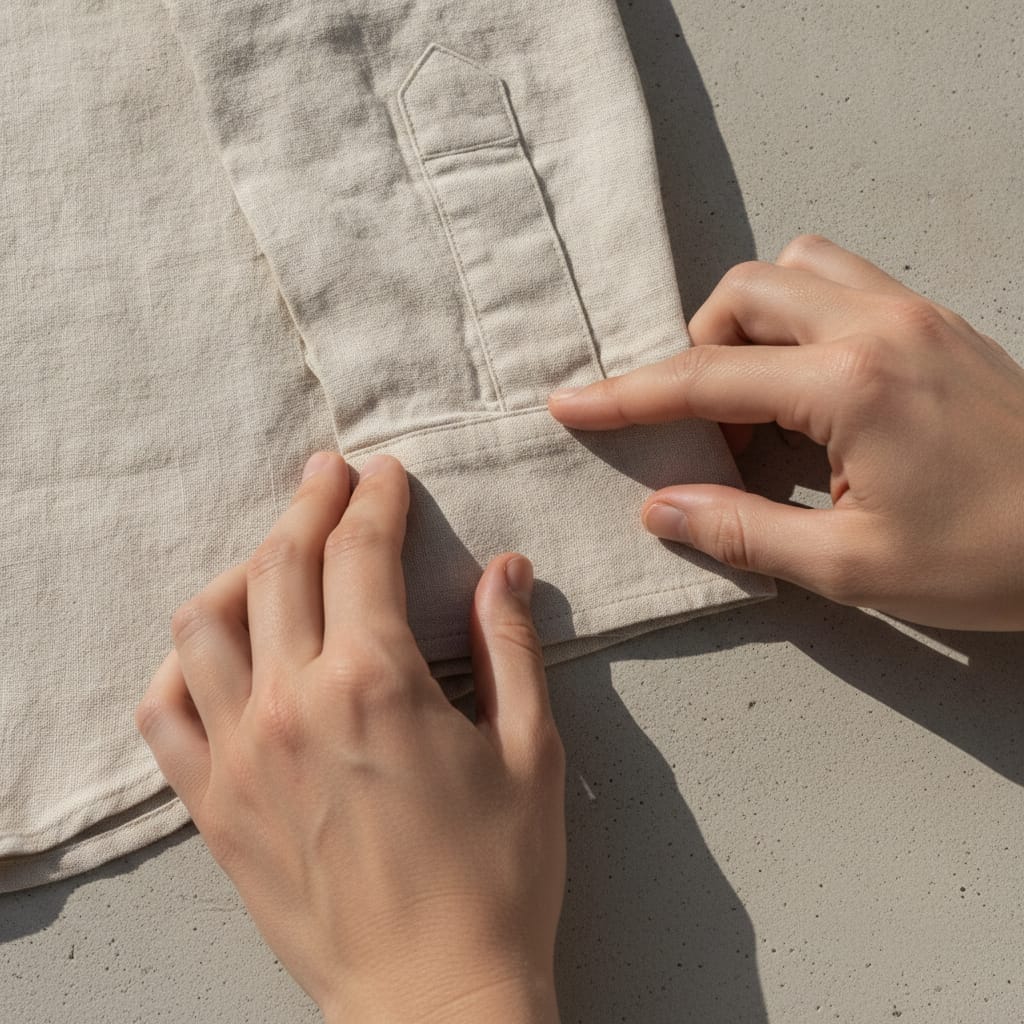
Another common mistake is skipping the details. The exact things a customer would touch in a physical store — fabric quality, seam finishing, closures — deserve a close-up. Those details can be the difference between hesitation and a purchase.
Finally: don't forget to optimise your videos for speed. A heavy video file that loads slowly frustrates visitors and hurts your SEO. Compress your videos and use a reliable video player or hosting solution like Vimeo or Shopify's built-in player.
- Inconsistent lighting between products
- Videos that run too long for the context
- Not accounting for silent viewing
- Skipping details customers actually want to see
- Heavy video files that increase load time
How does product video fit into a broader content strategy?
Product video works best as part of a consistent content strategy, not as a one-off experiment. Combine video with strong product photos, clear descriptions and relevant keywords, so every element reinforces the others and contributes to both conversion and findability.
A video grabs attention and builds trust, but a visitor ready to buy also needs text: sizes, material composition, washing instructions. Video and text complement each other. Make sure both are present on every product page.
For SEO, it's important to give your videos a descriptive file name, alt text, and — if you host them on YouTube or Vimeo — a good title and description. Search engines can't watch videos themselves, but they do read the metadata. Find out how to approach this for your images at optimising product photo SEO.
Want to make this process more efficient? It can help to combine production steps. FashionPix creates the product images and writes the SEO copy in the same workflow, saving time when you regularly add new collections.
Also think about repurposing. A video you make for your product page can be trimmed for Instagram, used as the base for a TikTok, and turned into a thumbnail for an email campaign. One shoot, multiple uses — that makes the investment go further.
How do you make a simple product video for clothing?
- Set up your filming space. Choose a fixed location with consistent lighting. Use daylight from the side or a softbox. Make sure the background is neutral, clean and matches your brand look.
- Prepare the garment. Steam or iron the garment so it looks well-kept. Check for loose threads or tags that might end up in frame.
- Film with a fixed camera angle. Use a tripod and set the camera at eye level or slightly above. Record a full shot (front and back), then add a close-up of a standout detail.
- Keep the video short and understandable without sound. Aim for fifteen to thirty seconds. Don't rely on sound to convey information — everything the viewer needs to know should be visible.
- Compress and publish. Reduce the file size without visible quality loss. Add a descriptive file name and alt text. Place the video prominently on the product page and reuse it on social media.
- Google Merchant Center supports product videos in Shopping ads and states that video can increase shopper engagement. — Google Merchant Center Help
- According to research by Wyzowl (2024), 89% of consumers say watching a product video convinced them to buy a product. — Wyzowl State of Video Marketing Report 2024
- Zalando notes in its sustainability report that returns are a significant environmental and cost issue for the fashion industry, underlining the importance of good product information. — Zalando Sustainability Report
Frequently asked questions
How long should a clothing product video be?
Fifteen to thirty seconds is usually enough for a product page. On social media like TikTok or Instagram Reels, videos of six to fifteen seconds work best. Keep it short: visitors want to see the essential information quickly, not a lengthy presentation.
Does a product video affect my return rate?
A product video gives customers a more realistic picture of fit, colour and material. That means they know better what they're buying, which lowers the chance of disappointment after delivery. A lower return rate is a commonly cited benefit of video on product pages, though the effect varies by category and audience.
What's the minimum equipment I need for a product video?
A modern smartphone with a steady tripod, good lighting (daylight or a simple softbox), and a clean background are enough to make a professional-looking product video. Your lighting quality has more impact on the end result than the camera itself.
Can I use the same product video across multiple platforms?
Yes, but adjust the format per platform. A horizontal or square video works well on a product page or in an email, while Instagram and TikTok call for a vertical format (9:16). The content can stay the same; you just crop the video differently for each channel.
Read more
- Bridal product descriptions
- WooCommerce vs Shopify
- Maternity photography for your webshop
- Selling modest fashion
- Product fotografie kleding
- Foto's maken voor je webshop
- Kleding fotograferen voor je webshop
- Video
- FashionPix — The signature of your webshop
Ready to get started yourself?
Video starts with a great still image — that's the starting point for every clip you create afterwards. Six images are free, no account and no credit card needed.