Where it goes wrong in practice
Everything's shown on a size 8
Casting multiple sizes is unaffordable for a small shop, so the whole collection gets photographed on one slim model. Your size-22 shopper has to guess how the fabric will fall on her — and guessing means returns.
Digital "stretching" is obvious
Some tools stretch a slim image into a bigger silhouette. The result is a warped print and a fit that doesn't actually exist. Order that once, and you won't order again.
Diversity stays a good intention
Every shop wants to show different ages, skin tones and body types. But every extra variant means another casting day, so it stays a line on the about-us page.
Same item, right build — from one photo
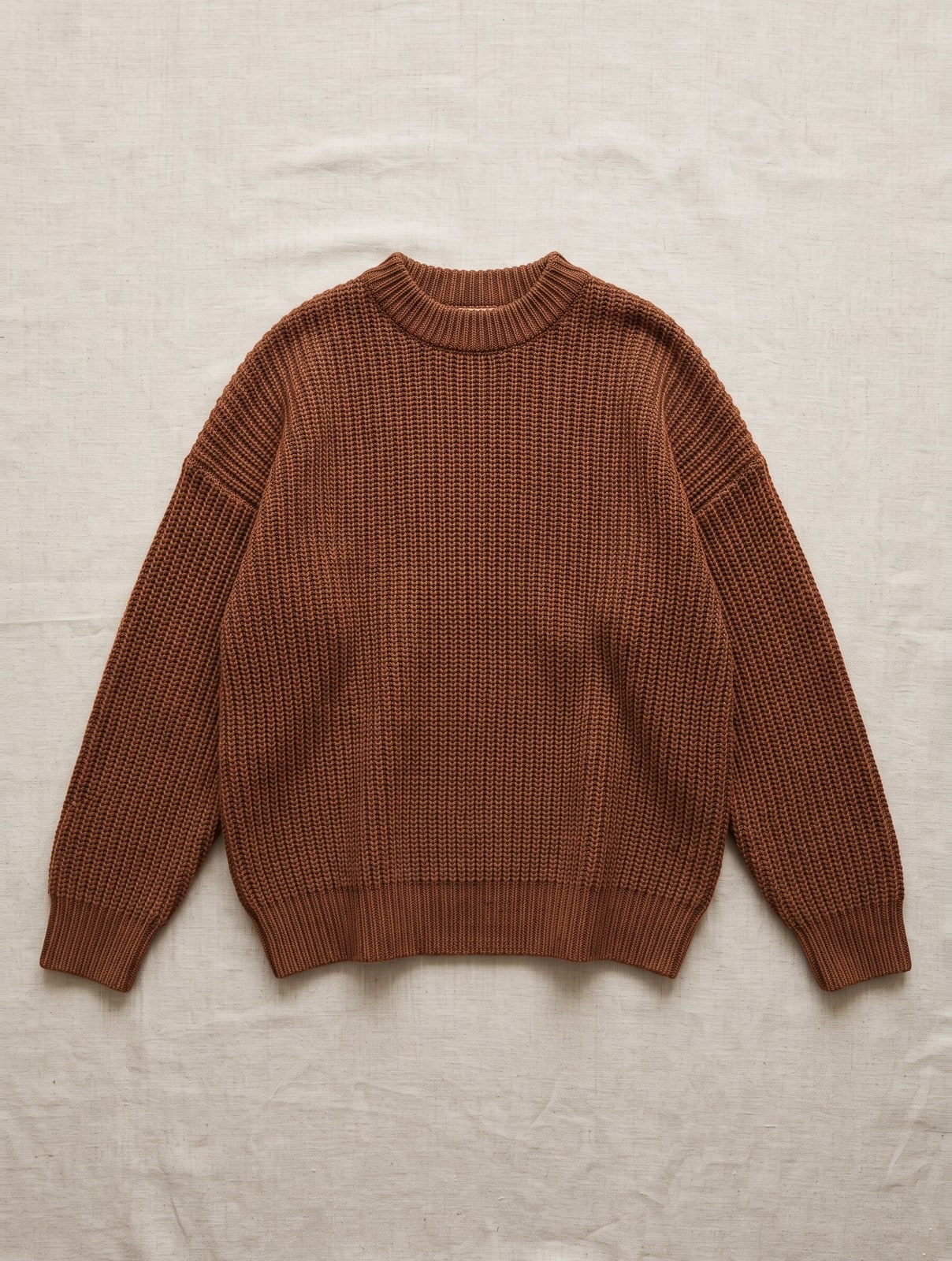
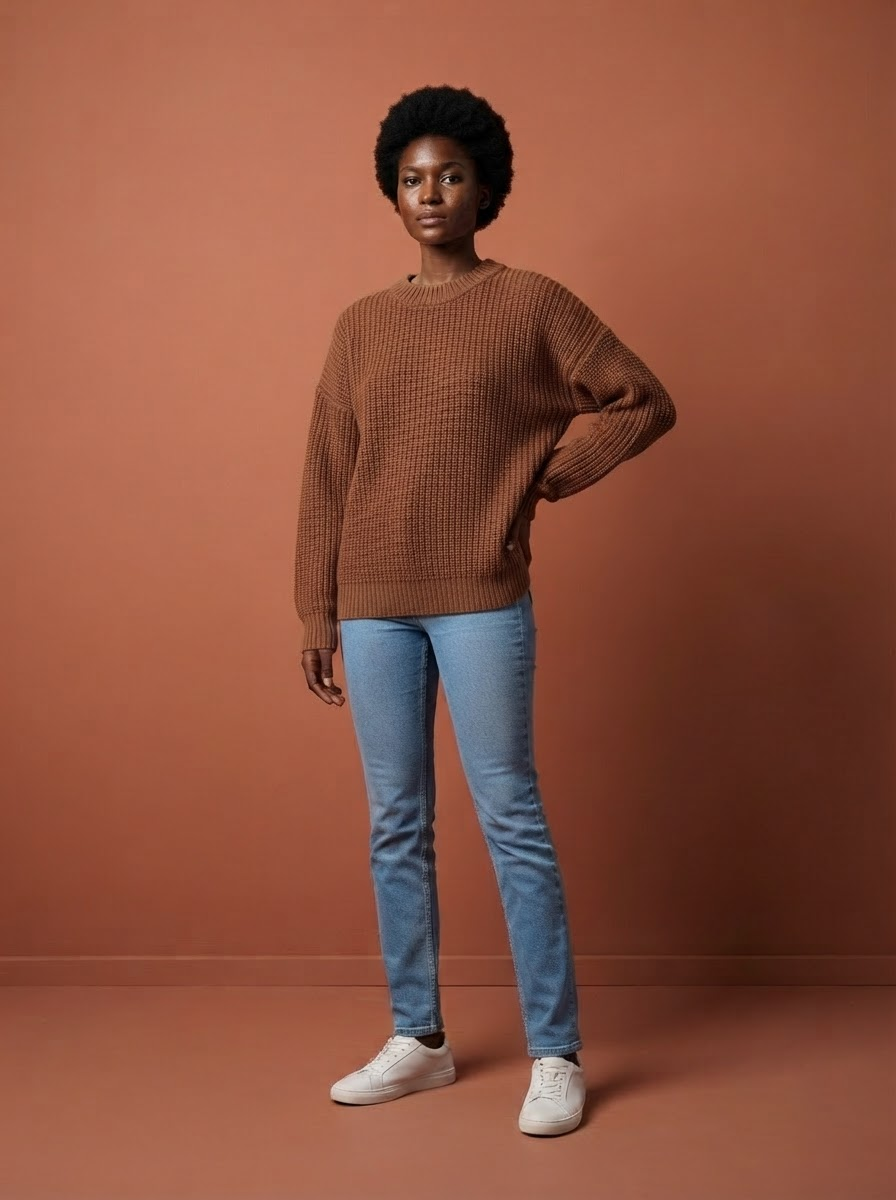
You upload one photo of the garment. We place it on a model with the build you choose — the real garment gets transferred, not redrawn, and the body underneath has real, believable proportions.
- Your own model with the build you choose — a size 46 is genuinely curvy, not a stretched slim model
- The pattern scales with the body; print, seams and hem length stay accurate
- Multiple body-type variants of the same item, shown side by side on your product page
- Age and skin tone are just as easy to choose — diversity as a brand choice, not a casting cost
- Add a house model too, and size info comes along automatically: height and size worn, in four languages
Why this shows up directly in your return rate
More than half of fashion returns come down to fit, and plus size sits at the top of that statistic: the further the shopper is from the model shown, the bigger the guess. Every image that shrinks that guess — the right build, and a second body-type variant alongside it if you want — pays for itself in packages that never get returned. Read how consistency works across your whole collection at photographing clothing for your webshop.
In three steps
- Take one photo. Flat on a table or on a hanger, with your phone. Daylight is enough.
- Create your own model. Once — with your target audience's build. The house cast is made up of slim fashion models; for plus size, you create your own.
- Every item just fits. Four images plus copy and alt text per item, on the models you chose.
Casting vs. FashionPix
| Showing multiple sizes | book a model per size | one model per build — once, then 1 credit per photo |
| Cost per item | € 60 – € 100 per shoot-day item | 5 credits — with copy in four languages |
| Copy and alt text | separate job | automatic, in four languages |
| Failed image | the shoot day's already paid for | automatically refunded |
| Turnaround | weeks of planning | ± 90 seconds per item |
Frequently asked questions
Does a size 22 actually look like a size 22?
Yes — that's measured, not promised. Your own model is built as a genuine body type: fuller hips, softer waist, real proportions. Not a slim model stretched out. Our house models are slim fashion models, so for plus size you create your own model once — that's exactly what this page is about.
Does the pattern stay accurate on a bigger body?
Yes. In our final test, the same patterned dress was placed on a size 8 and a size 20: the pattern scales the way real fabric does, and the hem length stays where it should be.
Can I show one item across multiple sizes?
Yes. You create two of your own models with different builds, then choose per shoot which of your models wears the item. Two body types side by side on the product page is often the strongest setup for a plus-size shop.
What does it cost?
One complete item — four images plus all copy, alt text and size info — costs 5 credits. Trying it is free: your first model photo, no account needed.
Is this legally compliant?
Yes. Every image automatically gets the machine-readable AI Act label. The size info and alt text that come free with it are also exactly what accessibility and consumer regulations require.
Read more
- The AI photoshoot
- Product photos for Zalando
- Work clothing photography
- Coat photography
- Moet je AI-foto’s melden? De AI Act uitgelegd
- Your own model
- FashionPix — Product photos, video and copy for your fashion webshop
Try it with your own item
Your first model photo is free, no account and no credit card. You keep it, even if you take nothing else.